Fees checked November 24, 2026
PSA Grading Cost Calculator
See what grading really costs before you ship a card. Enter what you paid and recent sold prices, and compare every PSA, BGS and CGC service level side by side, including the PSA upcharge when your card's value is above the tier limit.
Example prices only. Replace them with recent sold prices for your exact card and grade.
Verdict
Grade with CGC Economy
Expected return clears 15% after every fee.
- Expected net profit
- $158.14
- ROI
- +95.8%
- Break-even sale
- $190.20
- Cost per card
- $165.00
PSA upcharge warning
A Gem 10 copy is worth $650.00, above the value limit of 1 PSA tier. PSA can move the card up to the tier that covers its value and bill the difference. Example: Value becomes Standard (+$20.00 per card).
Expected sale $372.50 after grade odds. Selling raw instead nets −$15.90 after fees.
All 22 service levels compared
| Grader | Service | Fee / card | Turnaround | Max value | Expected net | ROI | Result |
|---|---|---|---|---|---|---|---|
| PSA | Value Billed as Standard | $59.99 | 90–100 days | $500 | $118.15 | +57.6% | Grade |
| PSA | Standard | $59.99 | 70–80 days | $1,000 | $118.15 | +57.6% | Grade |
| PSA | Priority | $79.99 | 50–60 days | $1,500 | $98.15 | +43.6% | Grade |
| PSA | Express | $199.00 | 20–30 days | $2,500 | −$20.86 | −6.1% | Sell raw |
| PSA | Super Express | $349.00 | 10–15 days | $5,000 | −$170.86 | −34.6% | Sell raw |
| PSA | Premier | $599.00 | 7–10 days | $10,000 | −$420.86 | −56.6% | Sell raw |
| PSA | Premium 1 | $999.00 | 5–7 days | $25,000 | −$820.86 | −71.8% | Sell raw |
| PSA | Premium 2 | $1,999.00 | 5–7 days | $50,000 | −$1,820.86 | −84.9% | Sell raw |
| PSA | Premium 3 | $2,999.00 | 5–7 days | $100,000 | −$2,820.86 | −89.7% | Sell raw |
| PSA | Premium 5 | $4,999.00 | 5–7 days | $250,000 | −$4,820.86 | −93.7% | Sell raw |
| PSA | Premium 10 | $9,999.00 | 5–7 days | No cap | −$9,820.86 | −96.8% | Sell raw |
| BGS | Base (Without Subgrades) | $14.95 | 90+ days | No cap | $163.19 | +102.0% | Sold out |
| BGS | Base (Subgrades) | $17.95 | 90+ days | No cap | $160.19 | +98.3% | Sold out |
| BGS | Standard | $34.95 | 45 days | No cap | $143.19 | +79.6% | Sold out |
| BGS | Express | $79.95 | 15 days | No cap | $98.19 | +43.6% | Grade |
| BGS | Priority | $124.95 | 5 days | No cap | $53.19 | +19.7% | Sold out |
| CGC | Bulk Billed as Economy | $20.00 | 150 days | $500 | $158.14 | +95.8% | Needs 25+ cards |
| CGC | Economy | $20.00 | 90 days | $1,000 | $158.14 | +95.8% | Grade |
| CGC | Standard | $55.00 | 10 days | $3,000 | $123.14 | +61.6% | Grade |
| CGC | Express | $100.00 | 5 days | $10,000 | $78.14 | +31.9% | Grade |
| CGC | WalkThrough | $300.00 | 2 days | $100,000 | −$121.86 | −27.4% | Sell raw |
| CGC | Unlimited Value | $300.00 | 2 days | No cap | −$121.86 | −27.4% | Sell raw |
Fees from the official PSA, Beckett and CGC price pages, checked November 24, 2026. Turnaround is in business days. "Max value" is the highest declared value each tier accepts.
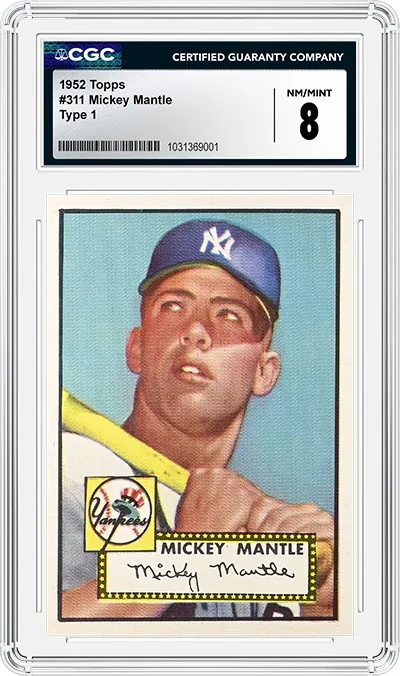
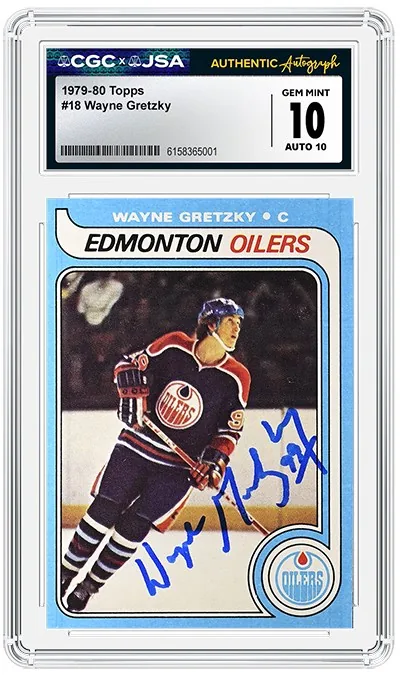
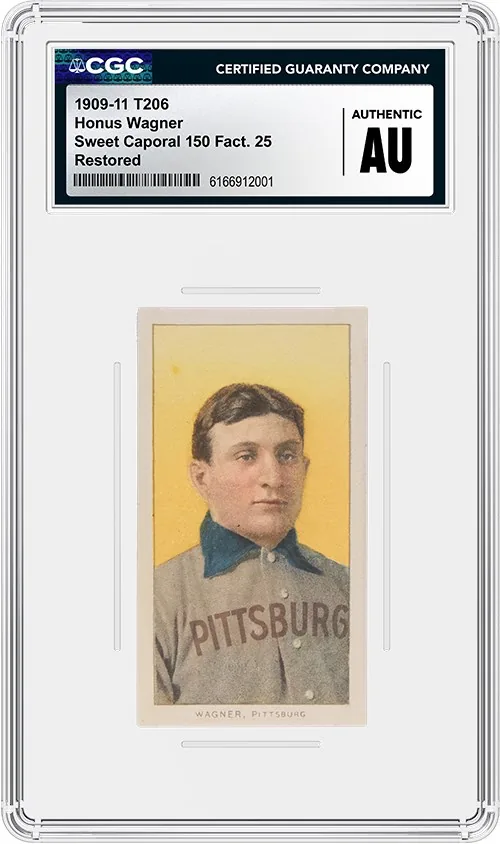
What you get back: real slabs
How grading costs add up
The grading fee is only one line on the bill. Your real cost per card is what you paid for the card, plus the grading fee, plus your share of shipping and insurance both ways. When the card sells, the marketplace takes its cut, so a $400.00 sale on eBay leaves about $347.00 before shipping.
Declared value drives the tier. PSA and CGC price each service level by the most a card can be worth. If you send a card worth $1,000.00 at a tier capped at $500.00, the grader can move it to the next tier and bill you the difference. That's why this calculator checks every tier against your Gem 10 price.
The grade is a gamble. A card that comes back a 9 or an 8 often sells for far less than a 10. Set the grade sliders honestly: look at the card under a bright light, check centering front and back, and look up how often that card earns a 10 in the grader's population report.
When grading usually pays
- The gap between the raw price and the Gem 10 price is several times the grading fee.
- A Mint 9 still sells for more than the raw card plus all costs.
- The card is a key rookie or a short-print parallel buyers prefer slabbed.
When to sell raw
- Common base cards and low-value parallels where a 9 would lose money.
- Cards with visible centering or corner issues.
- Anything where the verdict above shows a negative expected net.
Worked example: a $120.00 raw card through PSA Value
Say you paid $120.00 for a raw rookie. Recent sales put a PSA 10 at $400.00, a 9 at $190.00 and an 8 at $110.00. You think the card has a 30% shot at a 10, 50% at a 9 and 20% at an 8, and shipping plus insurance both ways runs $20.00.
- Cost in: $120.00 card + $39.99 PSA Value fee + $20.00 shipping = $179.99.
- Expected sale: 0.30 × $400.00 + 0.50 × $190.00 + 0.20 × $110.00 = $237.00.
- After eBay's 13.25%: $237.00 × 0.8675 = $205.60, so the expected net is $25.61.
- Break-even: $179.99 ÷ 0.8675 = $207.48. The slab has to sell for at least that before you make a dollar.
The average looks fine, but check the 9: $190.00 after fees is $164.83, which is −$15.17 against your cost. A 9 or an 8 loses money here, and that is 70% of likely outcomes. The 10s carry the whole submission.
Edge case 1: the $500.00 declared-value cliff
PSA Value covers cards worth up to $500.00. One dollar more and the card belongs in Standard at $59.99, a $20.00 jump. On a thin card that is the whole profit. Take a $150.00 raw card with a 25/50/25 grade split, a 9 comping at $200.00 and an 8 at $120.00. With the 10 comping at $500.00, the expected net is $11.22. If the 10 comps at $520.00, PSA can bill the higher tier and the same card drops to −$4.44. Look at the last few 10 sales, not the best one.
Edge case 2: the 25-card CGC Bulk tipping point
CGC Bulk costs $17.00 a card but needs at least 25 cards. Send 24 and you pay Economy at $20.00 each, or $480.00. Add one more card and the whole order drops to $425.00, $55.00 less for one extra card. The same 25 cards at PSA Value cost $999.75. For a stack of $20.00–$60.00 modern rookies, that gap decides whether grading makes sense at all, as long as each card stays under the Bulk value cap.
Edge case 3: BGS add-ons and the Mint 9 floor
Beckett adds $5.00 to grade an autograph and $8.00 for an oversized card. On the open Express tier ($79.95), a $300.00 on-card auto with $25.00 shipping costs $409.95 all in. Now test the downside, because a 9 is a likely result for many modern cards. A 9 that sells for $450.00 leaves you at −$19.57 after eBay fees and costs. Selling raw at the price you paid would lose $39.75 to fees. The 9 beats selling raw only above $426.74; if recent 9s sell for less, sell the card raw or pick a cheaper grader.
Grading cost questions
How much does it cost to grade a $1000 card?
For a card worth $1,000, the cheapest open tiers that cover that value are PSA Standard at $59.99, CGC Economy at $20.00 and BGS Express at $79.95 per card (fees checked November 24, 2026). Add shipping and insurance both ways, and plan for the marketplace fee when you sell.
Is PSA grading worth the cost?
It is when the Gem 10 and Mint 9 prices are well above the raw price plus every fee. Put your card into the calculator: if the expected return clears 15% after fees, grading is usually worth it. If a 9 would lose money, it is a gamble that only pays off on a 10.
How hard is it to get a PSA 10 rating?
It depends on the card. Centering, corners, edges and surface all have to be close to perfect, and modern chrome cards often show print lines or off-center cuts straight from the pack. Look up the PSA population report for your exact card to see what share of graded copies earned a 10, and use that as your Gem 10 slider.
Does BGS upcharge on grading?
The Beckett price list we use does not set a value cap per service level the way PSA and CGC do, so this calculator applies no value upcharge to BGS. Beckett adds fixed fees for autograph grading and oversized cards, which you can switch on above. Check Beckett's current terms before sending very high-value cards.
Is CGC cheaper than PSA?
For most modern cards, yes. For a $100 card the cheapest open PSA tier is Value at $39.99, while CGC Economy is $20.00, or Bulk at $17.00 when you send 25+ cards. A PSA slab often sells for more, so compare the expected net, not just the fee.